Summary of Key Points
- High-pitched squealing or harsh grinding noises signal worn brake pads.
- A soft or spongy brake pedal indicates low pad thickness or hydraulic issues.
- Vehicle pulling to one side suggests uneven brake pad wear.
- Visual inspection through wheel spokes helps measure remaining pad thickness.
- Replace brake pads every 25,000 to 70,000 miles depending on driving conditions.
Introduction
Every driver relies on their vehicle’s braking system for safety on the road. Recognizing the signs of worn out brake pads and when to replace them can save you from costly repairs and keep your daily commutes safe. Because your brakes gradually wear down over time, identifying early warning signs allows you to take action before critical brake failure occurs.
Common Signs of Worn Out Brake Pads
Your car provides several clear warnings when the braking system needs maintenance. Paying attention to these indicators will protect your vehicle’s rotors and maintain reliable stopping power.
1. High-Pitched Squealing or Screeching Noises
Brake pad manufacturers install a small metallic wear indicator inside the friction material. As the pad wears down, this metal sensor contacts the brake rotor, producing a sharp squealing sound. If you hear this noise regularly while applying the brakes, schedule a brake inspection promptly.
2. Harsh Metallic Grinding Sound
A loud grinding sound usually means the friction material has worn away completely. Consequently, the metal backing plate of the pad presses directly against the iron rotor. This metal-on-metal contact causes severe rotor damage and reduces your stopping power significantly.
3. Spongy or Soft Brake Pedal
When you press the brake pedal, it should feel firm and responsive. However, if the pedal feels soft or sinks close to the floorboard, your pads might be excessively thin. Additionally, this condition can signal air or moisture inside the hydraulic brake lines.
Visual Inspection and Vehicle Behavior
Vehicle Pulling to One Side
Does your vehicle pull toward the left or right when you press the brakes? Uneven wear on your front brake pads often causes this issue. Because one side grips stronger than the other, the car steers off course. A stuck brake caliper or collapsed brake hose can also cause similar pulling behavior.
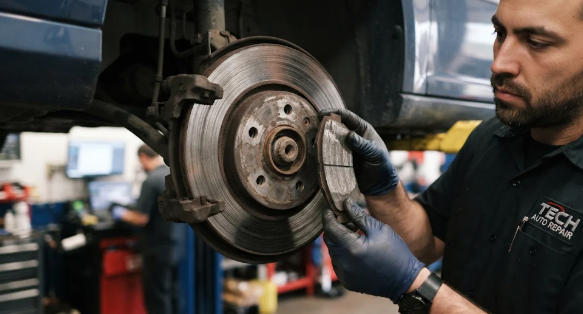
Inspecting Brake Pad Thickness
You can easily check your brake pad thickness through the spokes of your wheels. Look directly at the caliper to see the friction pad resting against the metal rotor. Ideally, your brake pad should measure at least one-quarter of an inch (6 millimeters) thick. If the pad appears thinner than a quarter inch, plan to replace it soon.
When to Replace Them and Maintenance Advice
Most automotive experts recommend replacing brake pads every 25,000 to 70,000 miles. However, your exact replacement schedule depends on your driving environment, vehicle weight, and personal driving habits. Stop-and-go city traffic wears down pads much faster than steady highway driving.
To maintain optimal vehicle safety, inspect your braking system during every routine oil change. For detailed vehicle safety standards and recall updates, visit the official National Highway Traffic Safety Administration website.
References
1. National Highway Traffic Safety Administration (NHTSA) – Vehicle Braking and Safety Standards.
2. National Institute for Automotive Service Excellence (ASE) – Brake System Repair Guidelines.
3. American Automobile Association (AAA) – Automotive Maintenance and Repair Advice.