Summary of Key Points
- Most modern vehicles require an oil and filter change every 5,000 to 7,500 miles.
- Full synthetic oils can last between 7,500 and 10,000 miles before needing replacement.
- You should always replace the oil filter every single time you change your engine oil.
- Severe driving conditions, such as towing or extreme weather, require more frequent service intervals.
- Checking your oil level monthly helps prevent engine damage between scheduled changes.
Introduction
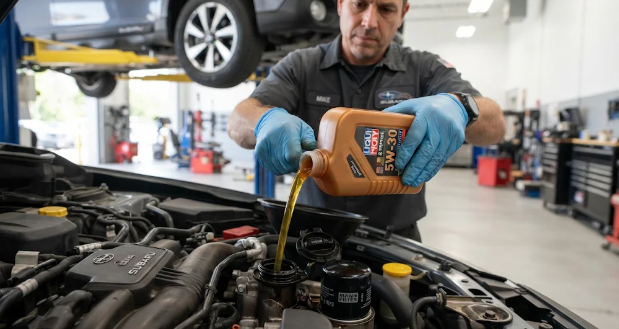
Every vehicle owner eventually asks, how often should engine oil and filter be changed to keep a vehicle running smoothly? Engine oil performs critical duties inside your vehicle. It lubricates moving parts, reduces friction, absorbs heat, and carries away harmful dirt and contaminants. Over time, extreme heat and pressure degrade the oil, causing it to lose its protective qualities.
Regular maintenance prevents catastrophic engine failure and saves you thousands of dollars in repairs. Understanding proper service intervals ensures your vehicle stays reliable for years to come.
Standard Maintenance Intervals for Modern Vehicles
In past decades, mechanics recommended changing your motor oil every 3,000 miles. However, advancements in modern engine technology and oil formulations have extended these intervals significantly. Modern vehicles using conventional oil typically require service every 3,000 to 5,000 miles.
If your vehicle uses full synthetic oil, you can safely extend that interval. Synthetic lubricants offer superior heat resistance and breakdown protection, lasting between 7,500 and 10,000 miles. Some specialized synthetic oils even last up to 15,000 miles. Always check your owner’s manual for specific manufacturer recommendations.
Why You Must Change the Oil Filter Every Time
The oil filter acts as the primary defense system for your engine. It traps dirt, metallic shavings, and sludge before these particles circulate through sensitive components. As you drive, debris fills the filter media, slowly reducing fluid flow.
If you install fresh oil without changing the filter, the new oil quickly collects trapped contaminants from the old filter. Furthermore, a clogged filter forces the engine bypass valve to open, allowing dirty, unfiltered oil directly into the engine. Therefore, technicians recommend replacing the filter during every single oil change.
Factors Affecting How Often Should Engine Oil and Filter Be Changed
Your personal driving habits heavily influence your service schedule. Severe driving conditions break down motor oil much faster than steady highway driving. You should shorten your service interval if you frequently experience severe driving conditions.
Severe driving conditions include:
- Frequent short trips under five miles in normal temperatures
- Extremely hot, cold, or dusty environments
- Stop-and-go traffic during peak commute hours
- Towing heavy trailers or carrying heavy payloads
If these conditions describe your daily commute, cut your recommended service mileage interval in half to protect your engine.
How to Check Your Oil Level and Quality
Monitoring your engine oil between services takes only five minutes. Park your vehicle on flat ground, turn off the engine, and wait ten minutes for the oil to settle into the pan. Pull out the dipstick, wipe it clean with a rag, reinsert it fully, and pull it out again.
Check that the oil level sits between the minimum and maximum indicator marks. Additionally, inspect the oil color and texture. Clean oil appears amber and clear, while dark brown or black oil filled with grit indicates an urgent need for fresh oil. For additional vehicle maintenance schedules and car care advice, explore expert guides on Car and Driver.
References
Car and Driver – Engine Oil Maintenance Guide: https://www.caranddriver.com
AAA Automotive – Vehicle Service Recommendations: https://www.aaa.com